Monday, June 01

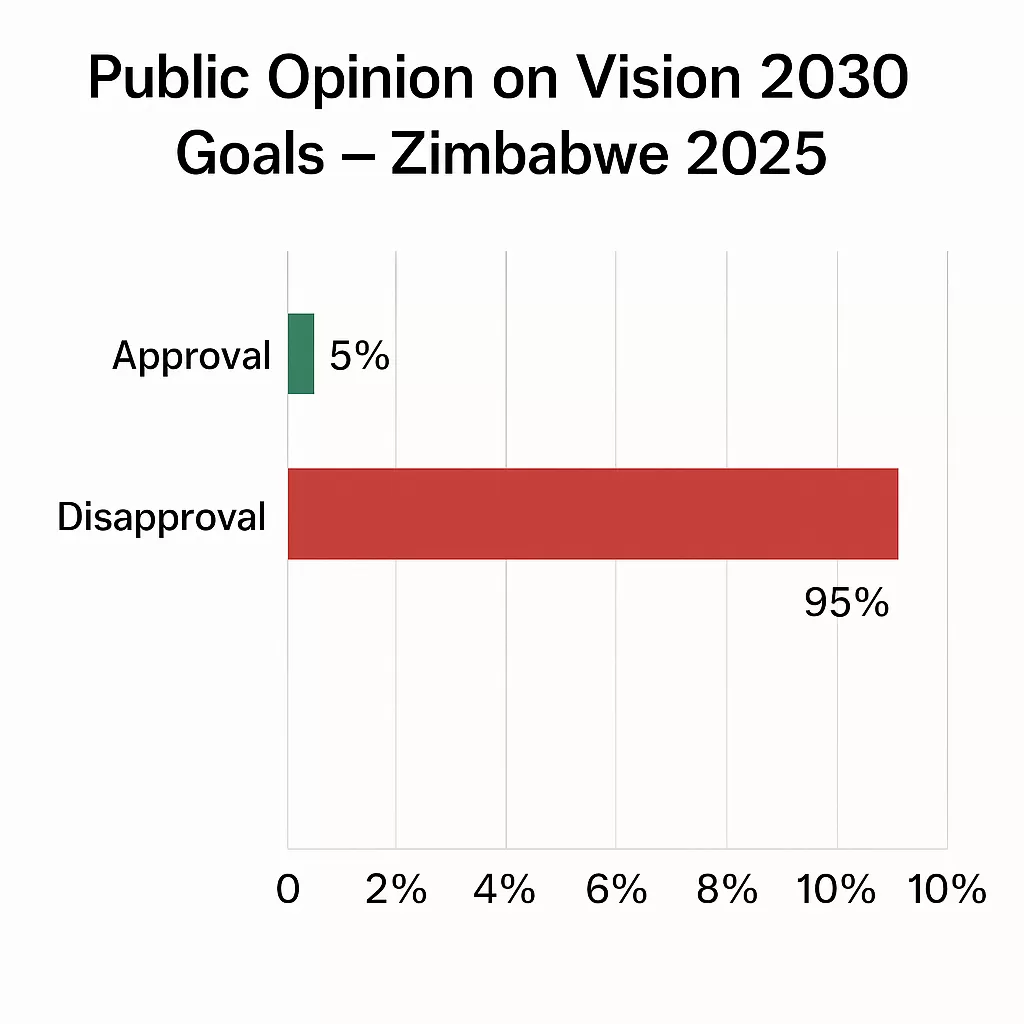
95% Of Zimbabweans Reject Mnangagwa Vision 2030

A new public opinion survey has sent shockwaves through Zimbabwe’s political landscape — revealing that 95% of Zimbabweans have lost confidence in President Emmerson Mnangagwa’s “Vision 2030” economic blueprint. The ambitious plan, launched to transform Zimbabwe into an upper-middle-income economy by 2030, is now being overwhelmingly rejected by citizens who say the promises of jobs, development, and stability have not materialized.

The poll, conducted across all ten provinces, shows widespread frustration with rising prices, unemployment, corruption, and lack of basic services, with many citizens calling Vision 2030 a “dream that never woke up.” Social media platforms like X (Twitter) and TikTok are flooded with memes and videos mocking the slogan — while some have renamed it “Vision 2030: Mission Impossible.” Even some ruling party supporters privately admit that the plan’s goals now seem “unreachable” as economic pressures continue to mount.


Meanwhile, opposition figures and activists are using the results as proof that Zimbabweans are ready for a new direction, demanding leadership that focuses on tangible change rather than political slogans. With the 2025 elections approaching, analysts warn that this overwhelming rejection could be a turning point in Zimbabwe’s political future — as the once-celebrated Vision 2030 risks becoming the symbol of national disappointment.

  • Share:

Info News

Slip and Fall Lawyer: When a Property Owner May Be Responsible

slip and fall lawyer, premises liability attorney, fall injury lawyer, store injury lawyer, slip and fall settlement, property injury lawyer

Slip and Fall Lawyer: When a Property Owner May Be Responsible

A slip and fall can happen quickly, but the effects can last for months or years. Falls can cause broken bones, back injuries, head trauma, knee injuries, shoulder damage, and long-term pain.

If you fell because of a dangerous property condition, you may wonder whether the property owner is responsible.

A slip and fall lawyer can help investigate whether negligence played a role.

What Is a Slip and Fall Claim?

A slip and fall claim is a type of premises liability case. It usually alleges that a property owner, business, landlord, or manager failed to keep the property reasonably safe.

Common locations include:

Grocery stores
Restaurants
Hotels
Apartment buildings
Parking lots
Sidewalks
Workplaces
Retail stores
Hospitals
Office buildings

Common Causes of Slip and Fall Accidents

Falls may be caused by:

Wet floors
Spilled liquids
Uneven flooring
Loose rugs
Broken stairs
Poor lighting
Ice or snow
Missing handrails
Cluttered walkways
Potholes
Unmarked hazards
Recently mopped floors without warning signs

The key question is whether the property owner knew or should have known about the danger and failed to fix it or warn people.

What Must Be Proven?

A slip and fall claim may require evidence showing:

A dangerous condition existed
The property owner knew or should have known about it
The owner failed to repair or warn
The condition caused the fall
The fall caused injuries
Damages resulted

Not every fall creates a legal claim. Evidence matters.

What to Do After a Slip and Fall

1. Report the Fall

Tell the property owner, manager, landlord, or store employee. Ask for an incident report.

2. Take Photos

Photograph:

The hazard
Floor condition
Lighting
Warning signs or lack of signs
Shoes worn
Injuries
Surrounding area
Security cameras nearby

3. Get Witness Information

Witnesses may confirm how long the hazard existed or whether employees knew about it.

4. Seek Medical Care

Medical records help document the injury and connect it to the fall.

5. Do Not Give a Recorded Statement Without Understanding Your Rights

Insurance adjusters may ask questions designed to reduce liability.

Common Slip and Fall Injuries

Slip and fall injuries may include:

Broken wrist
Broken hip
Ankle fractures
Knee injuries
Shoulder injuries
Back injuries
Neck injuries
Concussions
Head injuries
Soft tissue damage
Cuts and bruises

Older adults may face especially serious consequences from falls.

Why Video Evidence Matters

Many businesses have security cameras. Video may show:

The fall
The hazard
How long the hazard existed
Employees walking near the hazard
Whether warning signs were used
Whether the injured person was distracted

Video may be erased quickly, so acting early is important.

Statute of Limitations

Slip and fall lawsuits are subject to filing deadlines. Deadlines vary by state, and some claims against government entities may have shorter notice requirements. Personal injury statutes of limitations vary widely across the U.S.

What Compensation May Be Available?

A claim may include:

Medical bills
Physical therapy
Lost wages
Future treatment
Pain and suffering
Reduced mobility
Out-of-pocket expenses
Disability-related costs

The value depends on injury severity, liability evidence, medical records, and insurance coverage.

Final Thoughts

A slip and fall lawyer can help determine whether a property owner failed to keep the premises safe.

If you were hurt in a fall, report it, document the scene, seek medical care, and preserve evidence.

Strong proof can make a major difference in a premises liability claim.

Best Mortgage Refinance Rates in 2026: How to Lower Your Payments and Save Thousands

Introduction: Why Mortgage Refinancing Is a Smart Financial Move

Searching for the best mortgage refinance rates is one of the most effective ways homeowners can reduce monthly payments and save money over the life of their loan. With interest rates constantly changing, refinancing can provide an opportunity to secure better terms, improve cash flow, and even shorten your loan duration.

Many homeowners don’t realize how much they can save by refinancing at the right time. Whether your goal is to lower your interest rate, switch from an adjustable-rate mortgage to a fixed-rate loan, or access equity through cash-out refinancing, understanding your options is key to making the right decision.


What Is Mortgage Refinancing and How Does It Work?

Mortgage refinancing involves replacing your current home loan with a new one, typically with better terms. This process allows homeowners to adjust their interest rate, loan term, or monthly payment. For example, refinancing from a 30-year loan to a 15-year loan can help you pay off your mortgage faster while saving on interest.

There are several types of refinancing options available, including rate-and-term refinancing and cash-out refinancing. Rate-and-term refinancing focuses on improving your loan conditions, while cash-out refinancing allows you to access your home’s equity for expenses such as renovations, debt consolidation, or investments.


Benefits of Refinancing Your Mortgage

Refinancing offers multiple financial benefits when done strategically. One of the most significant advantages is the potential to lower your interest rate, which can reduce your monthly payment and save thousands over time.

Another benefit is the ability to consolidate high-interest debt into a lower-rate mortgage. Many homeowners use refinancing to pay off credit cards or personal loans, simplifying their finances. Additionally, refinancing can provide stability by switching from variable to fixed interest rates, protecting you from future rate increases.


How to Find the Best Mortgage Refinance Rates

Finding the best mortgage refinance rates requires research and comparison. Lenders offer different rates based on factors such as credit score, loan-to-value ratio, and financial history. Shopping around and comparing multiple offers can help you secure the most favorable terms.

Searches like “best mortgage refinance rates today” or “lowest home loan interest rates” indicate high intent from users ready to act. Working with reputable lenders and understanding market trends can improve your chances of getting a competitive rate.


Factors That Affect Your Refinance Rate

Several factors influence the interest rate you receive when refinancing. Your credit score plays a major role, as higher scores typically qualify for lower rates. Maintaining a strong credit profile can significantly impact your savings.

Other factors include your home equity, debt-to-income ratio, and overall financial stability. Lenders assess these elements to determine risk, which directly affects the rate offered. Improving these factors before applying can help you secure better terms.


When Is the Right Time to Refinance?

Timing is crucial when refinancing your mortgage. A general rule of thumb is to refinance when interest rates drop by at least 1% compared to your current rate. However, even smaller reductions can be beneficial depending on your loan balance and term.

It’s also important to consider how long you plan to stay in your home. Refinancing involves closing costs, so you’ll want to ensure that your savings outweigh these expenses over time.


Understanding Closing Costs and Fees

Refinancing is not free, and homeowners should be aware of the associated costs. These may include application fees, appraisal fees, and closing costs, which typically range from 2% to 5% of the loan amount.

While these costs may seem high, they can often be rolled into the loan or offset by long-term savings. Understanding these expenses helps you evaluate whether refinancing is financially beneficial.


Cash-Out Refinancing: Accessing Your Home Equity

Cash-out refinancing allows homeowners to borrow against their home’s equity, providing access to funds for major expenses. This option is popular for home improvements, education costs, or debt consolidation.

However, it’s important to use this strategy wisely, as it increases your loan balance. Careful planning ensures that the benefits outweigh the risks.


Common Mistakes to Avoid When Refinancing

Many homeowners make avoidable mistakes during the refinancing process. One common error is focusing solely on monthly payments without considering total interest costs. Lower payments may extend your loan term, increasing long-term expenses.

Another mistake is failing to compare multiple lenders. Accepting the first offer can result in missed savings opportunities. Taking time to evaluate options ensures you get the best deal.


How Refinancing Impacts Your Financial Future

Refinancing can have a significant impact on your financial future when done correctly. Lower interest rates and reduced payments free up funds for savings, investments, or other financial goals.

For many homeowners, refinancing is a strategic move that improves overall financial stability. By understanding your options and planning carefully, you can maximize the benefits of refinancing.


Frequently Asked Questions (FAQ)

Is refinancing worth it?
Refinancing is worth it if the savings outweigh the costs over time.

How long does refinancing take?
The process typically takes 30 to 45 days.

Can I refinance with bad credit?
It may be possible, but higher interest rates are likely.


Financial Strategy Insight

Making informed decisions about mortgage refinancing can significantly impact your long-term financial health. Comparing lenders, understanding loan terms, and evaluating your goals are essential steps in securing the best deal.

Searches like “best mortgage refinance rates” and “home loan savings strategies” reflect high-value intent. Working with trusted financial institutions ensures transparency and better outcomes.


Related Topics You May Find Helpful

  • Best Home Loan Options for First-Time Buyers
  • Debt Consolidation Strategies That Work
  • How to Improve Your Credit Score Quickly
  • Real Estate Investment Tips for Beginners