Monday, June 01

Army Generals Dismiss Rumors Of Coup Against Mnangagwa

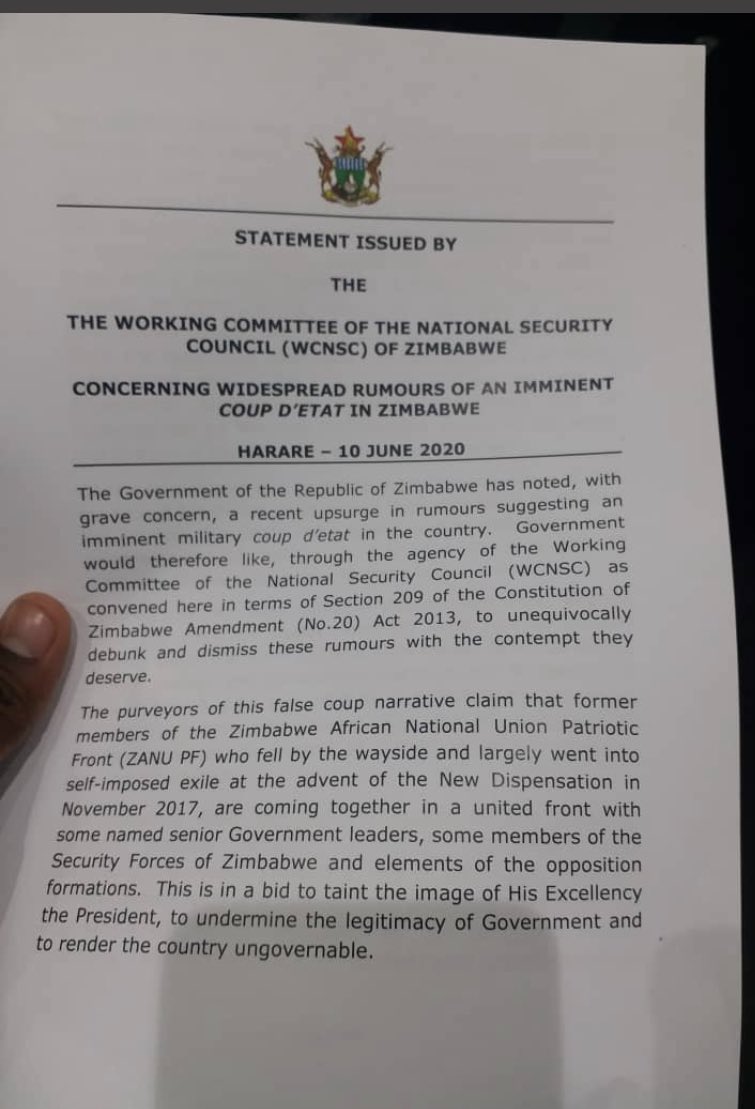
ARMY generals have denied the possibility of a coup led by former Zanu-PF members aligned to the late president Robert Mugabe who are currently in exile.

In a statement, the working committee of the National Security Council – a grouping of top bosses in all security arms of the country – said Zimbabwe boasted an “evolving electoral culture” and as such there was no room for a coup.

This is despite the November 2017 Operation Restore Legacy that catapulted President Emmerson Mnangagwa to power, bringing to end the late Robert Mugabe’s 37 years in power.

“Indeed, both claims – of a military coup and a transitional national authority in the making – amount to a mere agenda by merchants of discord,” reads the statement.
The statement singles out opposition politician Job Sikhala of the MDC Alliance and a Mugabe student, Savior Kasukuwere, both exiled in South Africa, as “purveyors of falsehoods”.

“The narrative, which also sets an agenda for and promotes negative political activism, including coordinated fake abductions and media campaigns, has of late roped in several local and international prophets,” it reads.

The generals also took a swipe at foreign embassies stationed in Harare for “misleading their capitals through purported intelligence”.

The statement was issued amid swirling rumours in Harare that the disgruntled exiles were working with named senior members of the establishment, security chiefs and point men in the opposition. “This is in a bid to taint the image of his excellency the president, to undermine the legitimacy of government and to render the country ungovernable,” warned the generals.

Zimbabwe is experiencing its worst economic crisis of the decade, with runaway inflation pegged at 676% by government statistics as of March, while independent economists put the current figure at 866%.

To curb growing disgruntlement from the civil service, the government said it would meet workers’ representatives this week for increment negotiations.

  • Share:

Info News

Business Liability Insurance: Complete Guide for Protecting Your Company

Running a business comes with risks—legal, financial, and operational. Whether you operate a small startup or a large enterprise, unexpected events such as lawsuits, property damage, or accidents can threaten your company’s stability. This is where business liability insurance becomes essential. It provides financial protection against claims that could otherwise result in significant losses or even business closure.

In today’s competitive and highly regulated environment, having the right liability insurance coverage is not just a safety net—it’s a strategic necessity. From customer injuries to professional errors, businesses face a wide range of risks. Understanding how liability insurance works and choosing the right policy can help safeguard your company’s future.

What Is Business Liability Insurance?

Business liability insurance is a type of coverage designed to protect companies from financial losses resulting from legal claims. These claims may arise from bodily injury, property damage, or negligence related to your business operations.

For example, if a customer slips and falls on your premises, your insurance can cover medical expenses and legal fees. Similarly, if your product causes harm or your service leads to financial loss for a client, liability insurance can help cover the costs.

This type of insurance ensures that businesses can continue operating even when faced with unexpected legal challenges.

Types of Business Liability Insurance

There are several types of liability insurance policies, each designed to address specific risks. Understanding these options helps businesses choose the right coverage for their needs.

1. General Liability Insurance

This is the most common type of coverage. It protects against claims of bodily injury, property damage, and advertising injuries. It is essential for businesses that interact with customers or clients.

2. Professional Liability Insurance

Also known as errors and omissions (E&O) insurance, this coverage protects businesses that provide professional services. It covers claims related to negligence, mistakes, or failure to deliver promised services.

3. Product Liability Insurance

Businesses that manufacture or sell products need this coverage. It protects against claims arising from defective or unsafe products.

4. Cyber Liability Insurance

With the rise of digital operations, cyber liability insurance has become increasingly important. It covers data breaches, cyberattacks, and other digital threats.

Each type of insurance addresses different risks, and many businesses choose a combination of policies for comprehensive protection.

Why Business Liability Insurance Is Important

Without proper insurance, a single lawsuit can have devastating financial consequences. Legal fees, settlements, and damages can quickly add up, putting your business at risk.

Liability insurance provides peace of mind by covering these costs and allowing you to focus on running your business. It also enhances your credibility, as clients and partners often prefer working with insured companies.

In some industries, having liability insurance is not optional—it is required by law or contractual agreements.

How Much Coverage Do You Need?

The amount of coverage your business needs depends on several factors, including the size of your company, industry, and level of risk. High-risk industries such as construction or manufacturing may require higher coverage limits than low-risk businesses.

It’s important to assess potential risks and consult with an insurance professional to determine the appropriate level of coverage. Underinsuring your business can leave you vulnerable, while overinsuring may result in unnecessary costs.

Factors That Affect Insurance Costs

The cost of business liability insurance varies based on multiple factors. These include the type of business, location, number of employees, and claims history.

Businesses with higher risks or previous claims may face higher premiums. However, implementing safety measures, training employees, and maintaining a good track record can help reduce costs.

Comparing quotes from different providers is also an effective way to find the best value for your coverage.

Common Mistakes to Avoid

One of the most common mistakes is assuming that basic coverage is enough. Many businesses fail to consider all potential risks, leaving gaps in their protection.

Another mistake is not reviewing policies regularly. As your business grows and evolves, your insurance needs may change. Regularly updating your coverage ensures that you remain adequately protected.

Failing to understand policy terms is another risk. Business owners should carefully review coverage details, exclusions, and limits to avoid surprises during a claim.

How to Choose the Right Insurance Provider

Selecting the right insurance provider is just as important as choosing the right policy. Look for companies with strong financial stability, positive customer reviews, and experience in your industry.

Customer support and claims handling are also critical factors. A reliable provider should offer prompt assistance and transparent communication throughout the claims process.

Working with an experienced insurance broker can help simplify the selection process and ensure you get the best coverage for your needs.

The Role of Risk Management

Insurance is only one part of protecting your business. Implementing effective risk management strategies can reduce the likelihood of claims and lower insurance costs.

This includes maintaining a safe work environment, training employees, and following industry regulations. Proactive risk management not only protects your business but also improves operational efficiency.

Final Thoughts

Business liability insurance is a critical component of any successful company’s risk management strategy. By providing financial protection against lawsuits and claims, it helps ensure long-term stability and growth.

Investing in the right coverage allows you to focus on building your business with confidence, knowing that you are prepared for unexpected challenges.


Insurance experts recommend working with licensed insurance providers, certified risk management consultants, and reputable business insurance companies to ensure comprehensive coverage and long-term protection.

Global Leaders in Corporate Event Planning and Execution

When it comes to global reach and operational excellence, companies like George P. Johnson and Freeman stand out as industry leaders. These organizations manage everything from international trade shows to high-profile corporate summits, offering end-to-end solutions that cover planning, production, and post-event analytics.

Their success lies in combining creative storytelling with advanced event technology. By leveraging virtual platforms, audience engagement tools, and real-time analytics, these companies ensure events are not only visually impressive but also measurable in impact. This level of sophistication makes them trusted partners for Fortune 500 companies worldwide.