Friday, July 17

Corruption Is Your Biggest Sanction United States Tells Zimbabwe Government

'Blaming sanctions is a convenient scapegoat to distract the public from the real reasons behind Zimbabwe’s economic challenges. As Zimbabwe’s government held choreographed events across the country on Monday, putting on a show for the visiting United Nations Special Rapporteur on sanctions, the United States and the European Union repelled claims there were any sanctions on the country.

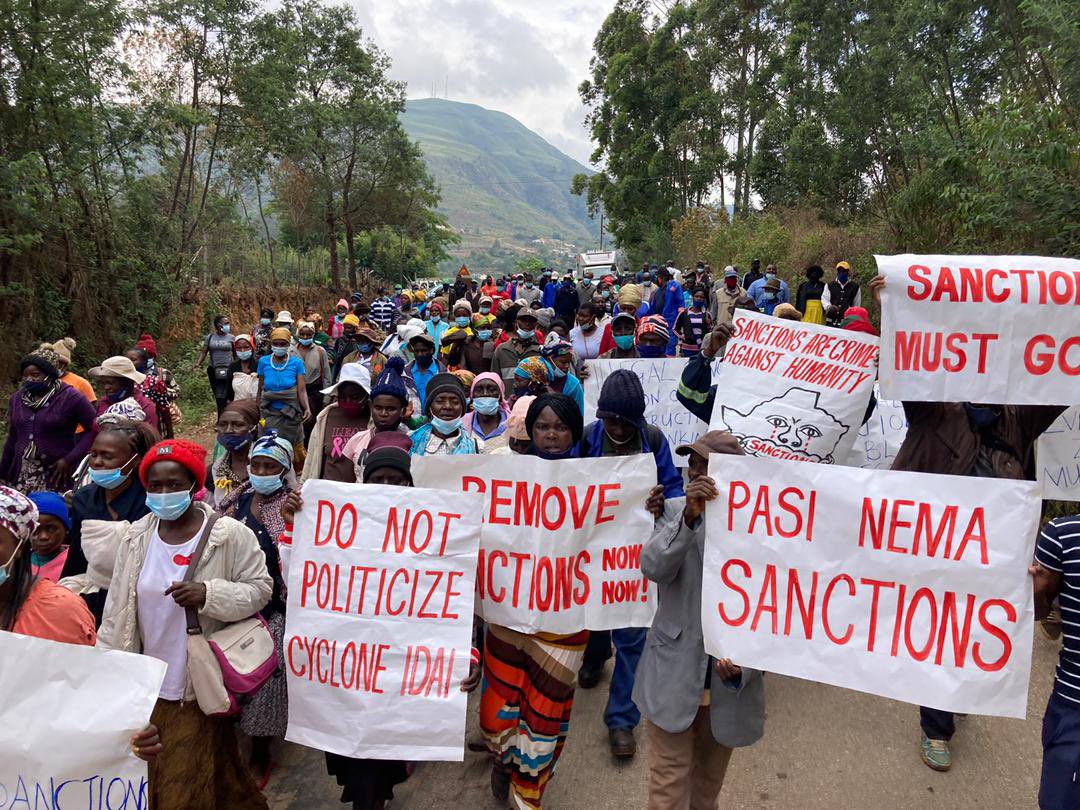
Thousands of people wearing Zanu PF gear and carrying placards denouncing “sanctions” marched in cities and towns around Zimbabwe, and President Emmerson Mnangagwa – in apparent defiance of his own Covid-19 regulations – gathered thousands of people in Mwenezi to mark “Anti Sanctions Day”.

“These sanctions are illegal and hurt the most vulnerable in our society,” Mnangagwa said October 18 when he met Alena Douhan, the UN Special Rapporteur on Negative Impact of Unilateral Coercive Measures on Human Rights.

In separate statements on Monday, the United States and the European Union missions in Zimbabwe insisted that the blame for Zimbabwe’s economic and humanitarian crises rest with President Mnangagwa’s regime.


“Blaming sanctions is a convenient scapegoat to distract the public from the real reasons behind Zimbabwe’s economic challenges – corruption, economic mismanagement, and failure to respect human rights and uphold the rule of law,” the US embassy said.

“Billions of dollars have been lost due to corruption and harmful economic policies which have culminated in the current economic crisis. Zimbabwe has had both prosperity and difficulty during the life of the targeted sanctions programme. Implementation of economic and political reforms are key to improving Zimbabwe’s trajectory.”

Dozens of Zimbabwean politicians linked to rights abuses, military chiefs, politically-connected businessmen and the state arms company are currently under United States sanctions. The sanctions prohibit U.S. citizens from doing business with the blacklisted individuals and arms sells to Zimbabwe, as well as barring the targeted rights violators from accessing the U.S. financial system or travelling there.

The European Union, meanwhile, only has the late former president Robert Mugabe and his wife on its blacklist, and the Zimbabwe Defence Industries, the state arms company.

“The EU has not imposed sanctions on Zimbabwe,” the European Union mission in Zimbabwe said.

“The only operational restrictive measures relate to defence and arms: a ban for EU companies to do business with Zimbabwe Defence Industries and an arms embargo. There are no other trade or economic restrictive measures.”

The European Union and the United States say Zimbabwe’s government is using sanctions as a figleaf to cover its own failures to meet electoral promises, including a stable currency, jobs, tackling corruption and upholding human rights.

“Zimbabwe falls short of its potential due to corruption and mismanagement by those in power and the government’s abuse of its own citizens, not targeted sanctions,” the U.S. embassy said.

The U.S. embassy said its government will only lift sanctions if “individuals or entities stop engaging in the behaviour that landed them on the sanctions list in the first place.”

“There is no U.S. trade embargo on Zimbabwe. If an individual or entity is not on the sanctions list, U.S. companies can trade with that individual or entity. In fact, the U.S. Embassy is here to help Zimbabwean businesses find trusted U.S. partners for their needs,” it said.

The United States has contributed US$3.5 billion in assistance to Zimbabwe since 1980 in health, development, and poverty alleviation. The European Union, meanwhile, said while Zimbabwe has a massive overall trade deficit, the country enjoys a trade surplus with the EU.

  • Share:

Info News

Real Estate Closing Costs: What Buyers and Sellers Should Expect

Real estate closing costs can surprise both buyers and sellers. The sale price gets most of the attention, but the final amount due at closing depends on lender fees, title charges, taxes, insurance, commissions, prepaid items, credits, and local customs. Understanding these costs early can prevent last-minute stress.

Buyer closing costs often begin with lender fees. These may include origination charges, underwriting fees, processing fees, credit report fees, appraisal fees, points, and flood certification. Some fees are charged by the lender, while others are paid to third parties. Buyers should review the loan estimate and closing disclosure carefully.

Title and escrow fees are also common. A title company or closing attorney may search property records, issue title insurance, prepare closing documents, handle funds, and record the deed or mortgage. Lender's title insurance is often required by the mortgage company. Owner's title insurance may protect the buyer's ownership interest, depending on the policy and local practice.

Prepaid costs can include homeowners insurance, property taxes, mortgage interest, and escrow deposits. These are not always fees in the traditional sense; they are amounts collected in advance to set up the loan and escrow account. Buyers should ask the lender to explain what is prepaid and what is a lender or third-party charge.

Private mortgage insurance may apply when the buyer has a smaller down payment. Depending on the loan type, mortgage insurance may be monthly, upfront, or both. Government-backed loans can have their own funding fees or insurance premiums.

Seller closing costs may include real estate commissions, title fees, transfer taxes, prorated property taxes, attorney fees, payoff charges, home warranty credits, repair credits, and concessions negotiated in the contract. If the seller agreed to pay part of the buyer's costs, that amount appears at closing.

Property taxes are often prorated between buyer and seller. The exact calculation depends on the local tax calendar and contract terms. In some areas, taxes are paid in arrears, which can be confusing. Ask the closing company or real estate agent to explain the proration.

Homeowners association fees can also affect closing. There may be transfer fees, resale certificate fees, working capital contributions, special assessments, or prorated dues. Buyers should review HOA documents before closing to understand ongoing obligations.

Negotiation can shift costs. A buyer may ask the seller for closing cost assistance. A seller may agree to credits instead of repairs. A lender may offer a credit in exchange for a higher interest rate. Each option affects the bottom line differently. Buyers should ask whether credits are allowed under the loan program because limits may apply.

The closing disclosure is the key document for buyers using a mortgage. It shows loan terms, projected payments, closing costs, cash to close, and transaction details. Review it as soon as it is available and compare it to the earlier loan estimate. Ask questions immediately if a fee is higher than expected.

Sellers should request a net sheet before accepting an offer. A seller net sheet estimates mortgage payoff, commissions, taxes, fees, credits, and expected proceeds. It can help compare offers that have different prices and concessions.

Because closing costs vary by state, county, lender, loan type, property type, and contract terms, online averages may not match your transaction. The best approach is to ask for written estimates from the lender, agent, title company, or closing attorney.

Real estate closing costs are not just fine print. They can affect affordability, negotiation strategy, and cash needed to complete the deal. Buyers and sellers who understand the numbers can make better decisions before closing day arrives.


Best Mesothelioma Lawyer: How Asbestos Claims Work

Mesothelioma is a rare and serious cancer often linked to asbestos exposure. Many people who develop mesothelioma were exposed years earlier while working in construction, shipyards, factories, power plants, military service, or older buildings. Because the disease can take decades to appear, many victims do not realize where the exposure happened.

A mesothelioma lawyer helps victims and families pursue compensation from companies that manufactured, sold, or used asbestos products. These cases are different from regular injury claims because they often involve old job records, product history, medical evidence, and special asbestos trust funds.

One reason mesothelioma cases are important is the high cost of treatment. Patients may face surgery, chemotherapy, immunotherapy, travel costs, lost income, and long-term care needs. Compensation may help cover medical bills, household expenses, pain and suffering, and support for surviving family members.

A good mesothelioma attorney will investigate where and how the exposure happened. This may include reviewing work history, military records, union records, product lists, job sites, and company documents. Many asbestos companies knew the risks but failed to properly warn workers and consumers.

There are different ways to seek compensation. Some victims may qualify for asbestos trust fund claims. Others may file a lawsuit against responsible companies. In some cases, family members may file a wrongful death claim after losing a loved one to mesothelioma.

Timing is very important. Each state has a deadline called a statute of limitations. If you wait too long, you may lose the right to file a claim. That is why many families contact a lawyer soon after diagnosis.

The best mesothelioma lawyer should have experience handling asbestos cases, access to exposure databases, strong medical knowledge, and a clear fee structure. Most work on a contingency fee, meaning they only get paid if compensation is recovered.

Mesothelioma is devastating, but victims may have legal rights. If asbestos exposure caused the illness, a specialized lawyer can help families pursue justice and financial support.