Opposition MDC Alliance (MDC-A) supporters have launched a fundraising campaign to buy a top-of-the-range bulletproof vehicle for the party leader Nelson Chamisa.
On Wednesday evening, the Go Fund Me campaign for Chamisa’s new vehicle was above US$2 400. The target for the new vehicle is US$120 000.
The fundraising campaign comes after Chamisa’s convoy was this week attacked by over 200 ZANU PF activists in Charumbira, Masvingo West where the opposition leader intended to meet local leaders.
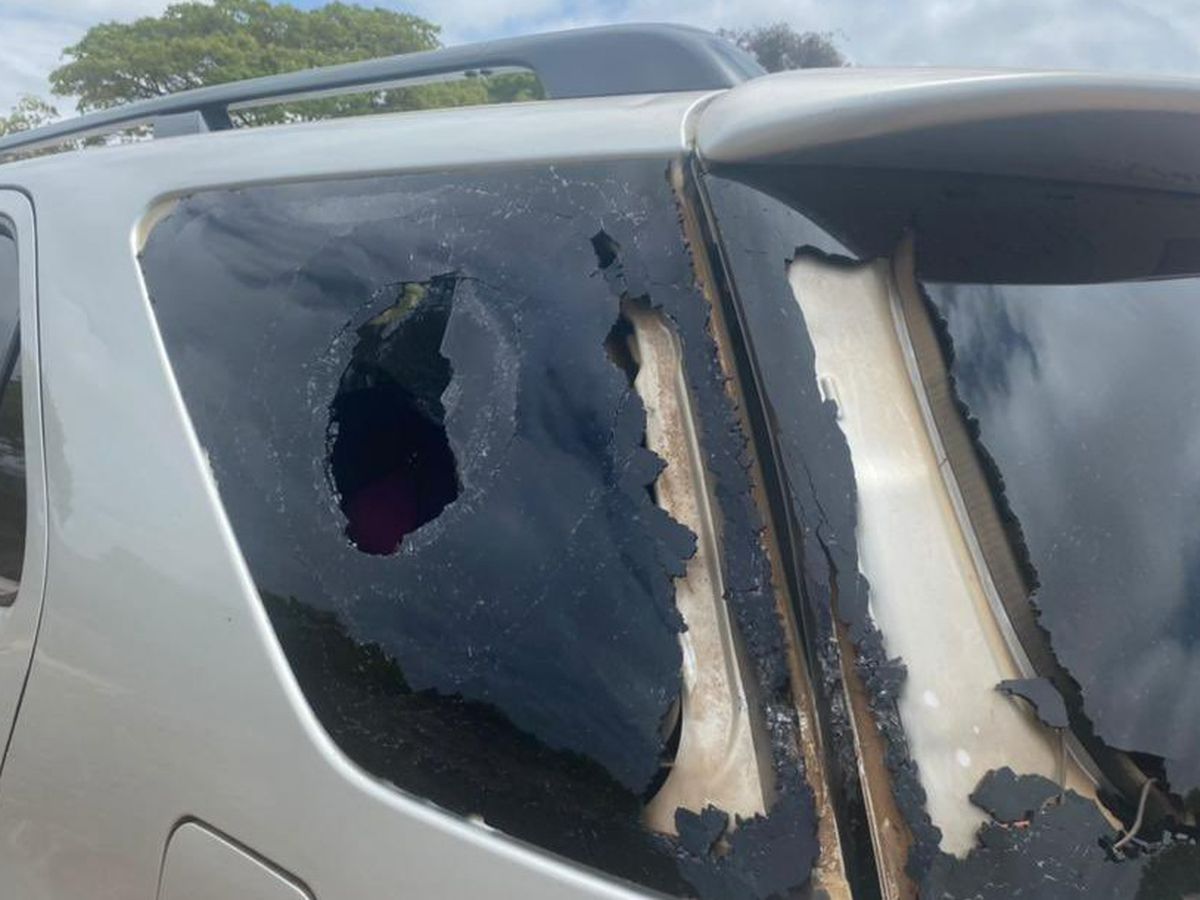
Several cars were stoned while party members had to seek medical treatment from injuries sustained during the attack.
One MDC Alliance supporter, only identified as T. Basvi, who started the Go Fund Me campaign said recent attacks showed that President Emmerson Mnangagwa’s government and ZANU PF wants to injure or cause serious harm to Chamisa. He added:
As the Diaspora community of Zimbabwe and friends, we want to send a clear message of solidarity by replacing Advocate Nelson Chamisa’s vehicle which was destroyed during the recent attacks orchestrated by the regime in Masvingo.
As concerned global citizens, we have come up with this initiative to raise funds for the purchase of an armour-plated vehicle as well as security apparel for his safety and security.
Meanwhile, Chamisa who is still in Masvingo province, which is also his home province, appreciated the support he is getting from the locals.
ZANU PF acting national political commissar Patrick Chinamasa defended the attack on Chamisa, telling reporters in Harare on Tuesday that Chamisa provoked ZANU PF supporters in Charumbira by forcing them to meet him.
Opposition MDC Alliance (MDC-A) supporters have launched a fundraising campaign to buy a top-of-the-range bulletproof vehicle for the party leader Nelson Chamisa.
On Wednesday evening, the Go Fund Me campaign for Chamisa’s new vehicle was above US$2 400. The target for the new vehicle is US$120 000.
The fundraising campaign comes after Chamisa’s convoy was this week attacked by over 200 ZANU PF activists in Charumbira, Masvingo West where the opposition leader intended to meet local leaders.
Several cars were stoned while party members had to seek medical treatment from injuries sustained during the attack.
One MDC Alliance supporter, only identified as T. Basvi, who started the Go Fund Me campaign said recent attacks showed that President Emmerson Mnangagwa’s government and ZANU PF wants to injure or cause serious harm to Chamisa. He added:
As the Diaspora community of Zimbabwe and friends, we want to send a clear message of solidarity by replacing Advocate Nelson Chamisa’s vehicle which was destroyed during the recent attacks orchestrated by the regime in Masvingo.
As concerned global citizens, we have come up with this initiative to raise funds for the purchase of an armour-plated vehicle as well as security apparel for his safety and security.
Meanwhile, Chamisa who is still in Masvingo province, which is also his home province, appreciated the support he is getting from the locals.
ZANU PF acting national political commissar Patrick Chinamasa defended the attack on Chamisa, telling reporters in Harare on Tuesday that Chamisa provoked ZANU PF supporters in Charumbira by forcing them to meet him.
MDC Alliance supporters have launched a fundraising campaign to buy a top-of-the-range bulletproof vehicle for the party leader Nelson Chamisa.
The pledge follows this week’s attack on Chamisa’s convoy by over 200 Zanu PF activists in Charumbira, Masvingo West where the opposition leader intended to meet local leaders.
Several cars were stoned while party members had to seek medical treatment from injuries sustained during the attack.
On Wednesday evening, the Go Fund Me campaign for Chamisa’s new vehicle was above US$2 400. The target for the new vehicle is US$120 000.
One MDC Alliance supporter, only identified as T. Basvi, who started the Go Fund Me campaign said; “The regime wants to continue to frustrate democracy by attacking the main opposition. The recent attacks showed that the regime wants to injure or cause serious harm to Advocate Nelson Chamisa.
“As Diaspora community of Zimbabwe and friends we want to send a clear message of solidarity by replacing Advocate Nelson Chamisa’s vehicle which was destroyed during the recent attacks orchestrated by the regime in Masvingo.
“As concerned global citizens, we have come up with this initiative to raise funds for the purchase of an armour-plated vehicle as well as security apparel for his safety and security.”
Meanwhile, Chamisa who is still in Masvingo province, which is also his home province, appreciated the support he is getting from the locals.
“I am so energised by the solid support here as I continue this communities and citizens interface, a tour of rural parts of Zimbabwe.
Info News
DUI With CDL: Why Commercial Drivers Need Legal Help Fast
DUI with CDL, CDL DUI lawyer, commercial driver DUI, truck driver DUI attorney, CDL disqualification, DUI commercial license
DUI With CDL: Why Commercial Drivers Need Legal Help Fast
For a commercial driver, a DUI is not just a criminal case. It can threaten your career.
A commercial driver’s license is a livelihood. If you drive a truck, bus, delivery vehicle, or other commercial vehicle, a DUI charge can affect employment, insurance, licensing, and future job opportunities.
That is why commercial drivers should speak with a CDL DUI lawyer quickly after an arrest.
Why CDL DUI Cases Are Different
Commercial drivers are often held to stricter standards than regular drivers.
A DUI can create problems even if:
You were driving your personal vehicle
You were off duty
No accident happened
It was a first offense
Your employer has not been notified yet
The consequences can include CDL disqualification, job loss, and difficulty getting hired later.
Lower Alcohol Limits for Commercial Drivers
Commercial drivers operating commercial motor vehicles are generally subject to stricter alcohol rules than regular drivers. Federal safety rules and state laws may impose lower BAC standards for CDL holders while operating commercial vehicles.
Because CDL law is technical, speak with a lawyer familiar with both DUI defense and commercial driving rules.
Possible CDL Consequences
A DUI may lead to:
CDL disqualification
Loss of job
Higher insurance risk
Employer reporting issues
Difficulty finding future driving work
Required alcohol assessment
Criminal penalties
License suspension
Ignition interlock issues
A regular hardship license may not fully protect commercial driving privileges.
What If the DUI Happened in a Personal Vehicle?
This is one of the most important questions CDL holders ask.
In many situations, a DUI in a personal vehicle can still affect CDL privileges.
Do not assume your CDL is safe because you were not driving a commercial vehicle.
What Should a Commercial Driver Do After a DUI Arrest?
Take these steps:
Save all paperwork
Check court date
Check license deadlines
Do not miss hearings
Avoid discussing the case publicly
Do not drive if your license is suspended
Contact a DUI lawyer quickly
Ask about CDL-specific consequences
Review employer reporting rules
Evidence a CDL DUI Lawyer May Review
A lawyer may review:
Reason for the stop
Field sobriety tests
Breath test procedure
Blood test records
Officer report
Body camera video
License paperwork
Refusal allegation
Commercial driving status
Vehicle type
Employer records when relevant
Why Plea Decisions Matter
A plea that seems acceptable for a regular driver may be devastating for a CDL holder.
Before accepting any offer, a commercial driver should understand:
CDL disqualification
Employer consequences
Insurance consequences
Future hiring impact
State motor vehicle agency rules
Federal commercial driving implications
Can a CDL Driver Keep Working After a DUI?
It depends on the facts, license status, employer policy, and applicable law.
Some drivers may be immediately removed from driving duties. Others may continue temporarily while the case is pending, depending on license status and employer rules.
Do not drive commercially unless you are legally allowed to do so.
Final Thoughts
A DUI with a CDL can threaten your career, not just your record.
Commercial drivers should act quickly, protect deadlines, and speak with a lawyer who understands DUI defense and CDL consequences.
One wrong decision can affect years of income.
Elevating Business Experiences: Inside the World of Top Corporate Event Management Firms
Top-tier corporate event management companies specialize in transforming business gatherings into impactful, memorable experiences. Firms like CWT Meetings & Events and BCD Meetings & Events are known for delivering large-scale conferences, executive retreats, and product launches with precision. These companies integrate logistics, creative design, and technology to ensure seamless execution from start to finish.
What sets these firms apart is their ability to align events with business objectives. Whether it’s strengthening brand identity or driving stakeholder engagement, they use data-driven strategies and innovative formats to maximize ROI. From hybrid event solutions to immersive experiences, top-tier agencies are redefining how corporations connect with audiences.


