Friday, October 16

Zororo Makamba Buried A Day Death From Corona Virus

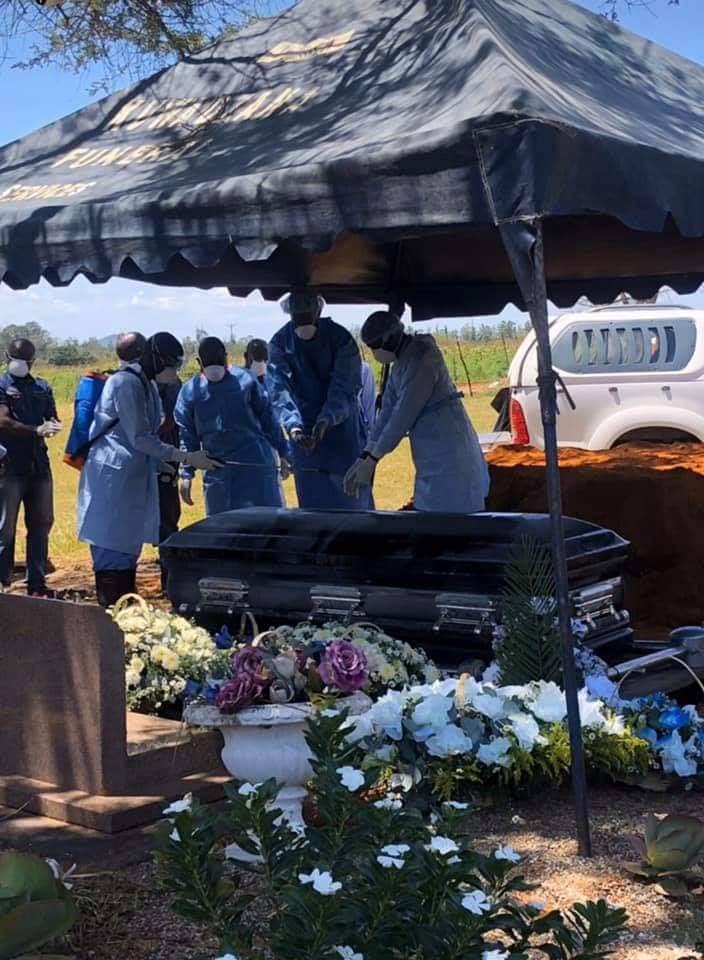
Zororo Makamba had been laid to rest a day after passing away due to coronavirus. Pallbearers  and mourners were wearing protective gear we assume to avoid catching the coronavirus. News has come out from the Makamba family that Wilkins and the government is no prepared to treat patiance with Coronavirus. Reports are that there was no ventilator, water and electricity to help treat Zororo Makamba who passed away at Wilkins Hospital.


Related Story

Following the death of talented presented Zororo Makamba (30), who contracted the coronavirus, his family have issued a statement narrating the circumstances leading to his tragic death. Zororo’s brother and family spokesman Tawanda Makamba gave the following explanation in an interview with Sindiso Mhlope, a journalist with the privately owned Daily News.

Zororo was in New York for 20 days and when he came back he had a slight flue, a cold. He then went to his general practitioner and they checked him for coronavirus symptoms and they said he didn’t have them at the time. Also Watch Mnangagwa responding to coronavirus threat in bank and roller meal queues. He was just told that he had a cough and a flue because in New York it’s cold and here it’s hot, so they then treated him for flue and he came back home. On Friday last week he started developing a fever and his doctor recommended that he had to be admitted. This is because Zororo had a tumour removed from just under his left lung last year in November and he was under an 18-month recovery time-frame.

His immune system was already compromised, so the doctor was very keen that he gets into the hospital and receives proper medication to help him get over the flue and fever. He was further advised to go to Wilkins Hospital to test for the coronavirus. He arrived at Wilkins Hospital by 10 am and samples were collected from him and we were told that the results would be in after 6 hours. After 6 hours there were no results and his general practitioner called to find out why the results had not been availed yet. The hospitals officials then told the GPA that they had not run the tests yet they were waiting for samples from provincial hospitals to run them all at once.

The doctor got frustrated and started questioning why they had not run the tests given that Zororo’s condition was deteriorating. After some time they then decided to run the test and in the meantime we took him home and he needed oxygen. His GPA phoned around and an ambulance came home to deliver the oxygen and then we got the positive results for coronavirus at about 1:30 or 2:00am the following day. They told us that now that they had confirmed that he had the virus he had to be taken to the Wilkins Hospital for treatment. We then inquired if we could him bring immediately and we were told that the hospital was not ready to receive coronavirus patients. So in the morning we waited and waited and they were still not ready to admit him. He ended up being admitted around 10am and 11am.

His doctor made it clear earlier on that he had to be on a ventilator because he could not breathe. However, when we got at Wilkins Hospital there was no ventilator, no medication and even the oxygen would run out and they had to get it from the City of Harare. After that we ran around to find a ventilator for him and we managed to get a portable ventilator from a family friend who had a relative who used the ventilator before he died. In terms of medicine you need to breathe, they didn’t have it there, we had to go and buy it in South Africa. We ended up finding some today (yesterday) just as he was passing away at a local pharmacy, yet the hospital was telling us it was not locally available.

We then brought the ventilator on Sunday by 2pm and when we got here, because the portable ventilator had an American plug, they told us to get an adapter because they only had round sockets at the hospital. I then rushed to buy an adapter and came back and they never used it and when I asked why they were not using the ventilator they said they had no sockets in his room. So they didn’t have medication, ventilators and we brought them a ventilator and they didn’t have sockets in his room. I told them that I had an extension cord and pleaded with them to use the cord, but they refused. They forced us to come here, but failed to deliver on their promise. When Zororo had his operation, he had it at Health Point Clinic. I contacted the people at Health Point and asked if they were willing to take Zororo in and they said yes and that they had already set up a facility to accommodate him.

We then appealed to Health minister Obadiah Moyo that since you are not prepared at Wilkins Hospital can we take him to Health Point and he refused. Minister Moyo said we could not take him there and that needed to be treated at Wilkins. We were puzzled and wondered how he could say that Zororo should be treated at Wilkins when they don’t even have plugs in his room to connect the ventilator. He promised us all sorts of things that this morning (yesterday) they would definitely be a ventilator and equipment but nothing materialised. If you go inside there you will see that they are not prepared to handle cases this side.

The minister at some point also suggested that we could take him to a trauma centre in Borrowdale. When it was now time for us to go to Borrowdale trauma they refused us to go there. Instead they got the owner of Borrowdale Trauma Centre to call me and he told me that he could come and set up an ICU at Wilkins for Zororo complete with a ventilator and monitors, but he said that we had to pay US$120 000 for the equipment. He added that once Zororo finishes using the equipment and recovers we had to donate the equipment to Wilkins Hospital. So basically the hospital wanted us to buy the equipment for them. We don’t have US$120 000 and it is not our responsibility to buy equipment for the government.

On top of that, remember this is a critical patient, nurses would only visit him after two hours because they were afraid of handling his situation. We had to phone from home, calling the nurse station to tell them that Zororo was in distress and that his oxygen was finished because they were not going to check on him. It even got to a point where they were telling us that we are bothering them but Zororo was struggling in there.
My mother and his fiancé have been parked out here for the past two days and they wouldn’t allow us to come in. The minister lied to us on many occasions. He lied to us that they were going to bring equipment and doctors but nothing ever materialised.

We reached out to President Emmerson Mnangagwa and First Lady Auxilia Mnangagwa who promised us that Zororo could be transferred to Beatrice and that there was a room for him. Nothing came out of this. We even appealed to them saying that if they have failed then they should allow us to take him home and treat him ourselves because really what he needed was oxygen. At the end before he died, he kept telling us that he was alone and scared and the staff was refusing to help him to a point where he got up and tried to walk out and they were trying to restrain him.

So this is how my younger brother ended up dying. I want people to know that the government is lying. Remember at some point I spoke to the president and he was saying that the report he received about Wilkins from the Health minister is that there is equipment and medicine. However, right now they don’t even have water at Wilkins. So if you come here to be treated for corona there is absolutely no treatment you will get, you will die. I am not a healthcare giver but I have respect for nurses and doctors. The doctor we were in contact with here at Wilkins would turn off his phone yet he was the critical contact person, the nurses also refused to help us.

So people need to know that the government is ill-prepared, it is not ready to deal with this virus. Right now we have been outside since 12pm and they have not given us his body, neither have they told us the way forward. Zororo passed away between 11am and 12pm today (Monday) and the hospital called us to come and look at his body. When we got there, we were, however, told that they had already put his body in a body bag and taken it to the mortuary. Until now at 5pm we have been waiting for further communication and they have not even given us any of his belongings. This is such a heart-breaking experience for us and it goes to show the lack of seriousness our government has in dealing with the coronavirus.

  • Share:

Info News

Slip and Fall Lawyer: When a Property Owner May Be Responsible

slip and fall lawyer, premises liability attorney, fall injury lawyer, store injury lawyer, slip and fall settlement, property injury lawyer

Slip and Fall Lawyer: When a Property Owner May Be Responsible

A slip and fall can happen quickly, but the effects can last for months or years. Falls can cause broken bones, back injuries, head trauma, knee injuries, shoulder damage, and long-term pain.

If you fell because of a dangerous property condition, you may wonder whether the property owner is responsible.

A slip and fall lawyer can help investigate whether negligence played a role.

What Is a Slip and Fall Claim?

A slip and fall claim is a type of premises liability case. It usually alleges that a property owner, business, landlord, or manager failed to keep the property reasonably safe.

Common locations include:

Grocery stores
Restaurants
Hotels
Apartment buildings
Parking lots
Sidewalks
Workplaces
Retail stores
Hospitals
Office buildings

Common Causes of Slip and Fall Accidents

Falls may be caused by:

Wet floors
Spilled liquids
Uneven flooring
Loose rugs
Broken stairs
Poor lighting
Ice or snow
Missing handrails
Cluttered walkways
Potholes
Unmarked hazards
Recently mopped floors without warning signs

The key question is whether the property owner knew or should have known about the danger and failed to fix it or warn people.

What Must Be Proven?

A slip and fall claim may require evidence showing:

A dangerous condition existed
The property owner knew or should have known about it
The owner failed to repair or warn
The condition caused the fall
The fall caused injuries
Damages resulted

Not every fall creates a legal claim. Evidence matters.

What to Do After a Slip and Fall

1. Report the Fall

Tell the property owner, manager, landlord, or store employee. Ask for an incident report.

2. Take Photos

Photograph:

The hazard
Floor condition
Lighting
Warning signs or lack of signs
Shoes worn
Injuries
Surrounding area
Security cameras nearby

3. Get Witness Information

Witnesses may confirm how long the hazard existed or whether employees knew about it.

4. Seek Medical Care

Medical records help document the injury and connect it to the fall.

5. Do Not Give a Recorded Statement Without Understanding Your Rights

Insurance adjusters may ask questions designed to reduce liability.

Common Slip and Fall Injuries

Slip and fall injuries may include:

Broken wrist
Broken hip
Ankle fractures
Knee injuries
Shoulder injuries
Back injuries
Neck injuries
Concussions
Head injuries
Soft tissue damage
Cuts and bruises

Older adults may face especially serious consequences from falls.

Why Video Evidence Matters

Many businesses have security cameras. Video may show:

The fall
The hazard
How long the hazard existed
Employees walking near the hazard
Whether warning signs were used
Whether the injured person was distracted

Video may be erased quickly, so acting early is important.

Statute of Limitations

Slip and fall lawsuits are subject to filing deadlines. Deadlines vary by state, and some claims against government entities may have shorter notice requirements. Personal injury statutes of limitations vary widely across the U.S.

What Compensation May Be Available?

A claim may include:

Medical bills
Physical therapy
Lost wages
Future treatment
Pain and suffering
Reduced mobility
Out-of-pocket expenses
Disability-related costs

The value depends on injury severity, liability evidence, medical records, and insurance coverage.

Final Thoughts

A slip and fall lawyer can help determine whether a property owner failed to keep the premises safe.

If you were hurt in a fall, report it, document the scene, seek medical care, and preserve evidence.

Strong proof can make a major difference in a premises liability claim.

Personal Injury Lawyer: When Should You Contact an Attorney After an Accident?

After an accident, many people are unsure whether they need a personal injury lawyer. Some claims are simple and can be handled directly with an insurance company. Others involve serious injuries, disputed fault, medical bills, lost wages, or long-term recovery. In those situations, speaking with a personal injury attorney may help you understand your options.

A personal injury lawyer usually helps people who were injured because of another person’s negligence. Common cases include car accidents, truck accidents, motorcycle crashes, slip-and-fall injuries, workplace-related third-party claims, and wrongful death claims.

You should consider contacting an attorney if your injuries require medical treatment beyond a simple checkup. Emergency room visits, surgery, physical therapy, specialist care, or long-term pain can increase the value and complexity of a claim. Insurance companies often review medical records carefully, and a lawyer can help organize the evidence needed to support your case.

You may also need legal guidance if the insurance company denies liability or blames you for the accident. Fault can affect how much compensation is available. In some states, partial fault may reduce or even prevent recovery, depending on local law.

Evidence is very important in a personal injury claim. After an accident, try to collect photos, witness information, police reports, medical records, repair estimates, and communication from insurance companies. Keep a written record of symptoms, missed work, doctor visits, and how the injury affects your daily life.

A personal injury claim may include several types of damages. These can include medical expenses, future medical care, lost income, reduced earning ability, pain and suffering, property damage, and other related losses. The value of a claim depends on the facts, documentation, injury severity, and available insurance coverage.

Many personal injury attorneys offer free consultations and work on a contingency fee basis. This means the attorney is paid from a percentage of the settlement or verdict, rather than charging upfront hourly fees. However, fee agreements vary, so always review the terms carefully.

Timing is also important. Every state has a deadline called a statute of limitations. If you wait too long, you may lose the right to file a claim. That is why it is usually better to ask questions early instead of waiting until the claim becomes complicated.

A personal injury lawyer cannot guarantee a specific outcome, but they can explain the process, communicate with insurance companies, evaluate damages, and help protect your rights. This article is general information only and is not legal advice.