President Emmerson Mnangagwa’s former aide and State House principal director, Douglas Tapfuma, has exposed how senior government and Zanu-PF officials allegedly abused the free-duty vehicle scheme for self-aggrandisement.
He added that some of the vehicles he is being accused of importing were used for campaign purposes in Chirumanzu-Zibagwe constituency.
Tapfuma named Youth deputy minister Tinoda Machakaire, who runs TinMac, a logistics company, as one of the many government and party officials who abused the scheme.
The facility was also used to buy campaign vehicles for Zanu-PF’s Vongai Mupereri in Mbizo constituency.
Tapfuma, who is facing a criminal abuse of office charge for allegedly abusing a government facility to import five personal vehicles, was testifying in court yesterday where he accused several Zanu-PF and government officials of using the facility for their personal projects.
He said some of the projects were meant to be “a good gesture to my principal, the President, Emmerson Mnangagwa”.
“Everyone in government and Zanu-PF has been doing it,” Tapfuma said.
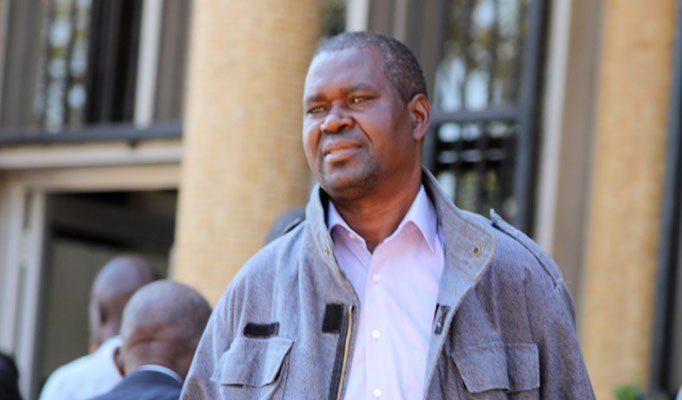
“I wrote a letter to Deputy Chief Secretary to the President and Cabinet Ray Ndhlukula requesting him for duty free exemption letter and the request was granted through the letter he signed. If there were any doubts of my requests, he would have declined, but due to the fact that everyone was doing it, I see no problems with that.”
He told the court that several officials connected to the system, that include Mupereri and Machakaire, imported their personal vehicles through the duty-free facility of the Office of the President and Cabinet.
“It is a system that has been in existence for long to import personal vehicles through the Office of the President and Cabinet under the vehicles duty-free facility. TinMac Company has done exactly what I am accused of and using the same documents that I used. Mupereri also used the same documents. These kinds of transactions have been in existence for a long time,” Tapfuma said.
He added that there were many high-profile personalities he could not name in court who have imported several personal vehicles using the duty-free facility.
He said he assisted in the importation of Mupereri’s two vehicles which are being used as an ambulance for his Mbizo constituency to prop up his political campaign so that he retains the seat for the Zanu-PF party and please Mnangagwa in the process.
Mupereri, however, lost the seat to MDC’s Settlement Chikwinya.
“When I assisted Mupereri, I wanted him to be seen as doing a wonderful thing by donating ambulances to his constituency and win a seat for the Zanu-PF party, which would be a good gesture to my principal, the President, Emmerson Mnangagwa,” Tapfuma said.
Quizzed by prosecutor Clement Chimbari why Mupereri did not use his Constituency Development Fund allocated by Treasury to pay duty for the vehicles instead of seeking for a duty free facility, Tapfuma said: “I made use of the facility for my benefit and also for the benefit of my principal, who is the President.”
Chimbari asked how the principal (Mnangagwa) would have benefited from his personal vehicles to which Tapfuma said the vehicles went to First Lady Auxillia Mnangagwa’s former constituency, Chirumhanzu-Zibagwe.
He said the vehicles were also used in the preparations for elections in the constituency “and that would also be a good gesture to my principal”.
On why he did not use the Zanu-PF party channels when importing the vehicles to campaign, Tapfuma said he had to use his privilege as State Residences director.
He said his downfall was orchestrated by Ndhlukula, who did not want him to be occupying his position as per appointment by Mnangagwa.
He said when Mnangagwa was appointed Vice-President in 2014, Ndhlukula refused to do an induction for them because he felt that they were people seconded by Mnangagwa and not the Office of the President.
Tapfuma described the allegations against him as malicious, accusing Ndhlukula of wanting to second his own people to such key positions.
The former State Residences director said his department and the Zimbabwe Revenue Authority had never complained about the importation of the vehicle via the facility and that there had not been any disciplinary procedures by his employer based on the issue.
The matter was remanded to March 26 for judgment.-
Info News
Mortgage Refinancing & Home Loans: Lower Your Interest Rates
Mortgage refinancing allows homeowners to reduce interest rates and monthly payments. With fluctuating market conditions, many individuals search for the best refinancing options. Content should focus on eligibility, benefits, and application processes.
SEO keywords like “best mortgage refinance rates” and “home loan options” drive high-value traffic. Providing updated, accurate information increases credibility and visibility in search results.
The Importance of Renewable Energy for Future Generations
Renewable energy has become one of the most important solutions for addressing climate change and reducing environmental pollution. Traditional energy sources such as coal, oil, and natural gas contribute significantly to greenhouse gas emissions and global warming. Renewable energy technologies offer cleaner alternatives that support long-term environmental sustainability.
Solar power, wind energy, hydroelectric systems, and geothermal energy are among the most widely used renewable energy sources today. These technologies generate electricity with significantly lower carbon emissions compared to fossil fuels. Many countries are investing heavily in renewable infrastructure to reduce dependence on imported fuels and improve energy security.
Renewable energy also creates economic opportunities through job creation and technological innovation. Engineers, construction workers, technicians, and researchers are increasingly employed in renewable energy industries worldwide. Developing countries are using solar systems and mini-grid technologies to expand electricity access in rural communities.
Despite its advantages, renewable energy still faces challenges such as infrastructure costs, battery storage limitations, and inconsistent energy production during certain weather conditions. However, advances in technology continue improving efficiency and reducing costs associated with clean energy systems.
Experts believe renewable energy will play a critical role in protecting future generations from environmental damage and supporting sustainable economic growth. International cooperation and continued investment in clean technology are essential for building a more environmentally responsible future.


